
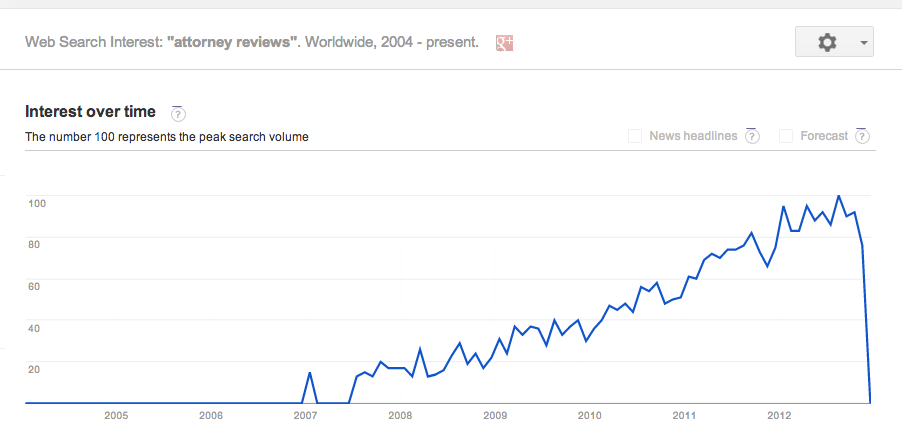
Public demand for lawyer ratings is on the rise. As the above graph from Google Trends shows, searches for the terms “attorney reviews” have increased five-fold in the past five years (the drop off results after October 2012 only because all data hasn’t yet available).
The push for lawyer reviews is hardly surprising. Today’s consumers routinely check ratings before reserving hotels, buying books or selecting a roadside diner. Even my thirteen year old, who frequently trolls Ebay for collectibles, won’t spend a minute looking at products purveyed by sellers who haven’t been reviewed.
As I’ve been saying for years, like it or not, lawyers can’t stop this ratings train.
But here’s what’s interesting. At the same time that clients are searching for online reviews, there’s also been a marked rise in paid leads, such as those run by Total Attorneys or just introduced by Attorney Boost.com. Essentially, the lead sellers build up large SEO-visible properties online to attract interested clients, and then sell those leads to attorneys who’ve registered for a particular practice area or region. Though the concept sounds like paid referrals, they pass muster because the lead sellers aren’t making referrals; they’re simply acting as a pass through, sending through leads to lawyers qualified to handle them.
Leaving aside whether you agree with this now ABA-approved ethics analysis ( some disagree), how viable is pay-per-lead in a ratings-based age? Consumers want ratings, that much is clear. But pay-per-lead systems can’t give consumers ratings or recommendations if they want to remain ethically compliant – because a rating or referral transform the ethically permissible pay-per-lead into a pay-for-recommendation/referral.
These days pay-per-lead is tempting. Lots of new companies that have invested big money in establishing an SEO toehold on line are now seeking to cash out, so they’re offering competitive rates for clients to get in the door. But do you want to spend even a few hundred dollars a month on a system that’s going to be obsolete in a few years? In my view, I’d rather put my money on building my own lead generator or focusing on ethically encouraging ratings and referrals from clients and colleagues.
What’s your experience with client ratings and lead generation? As always, comments are open; please share below.
What’s your experience with client ratings and lead generation?
“Lead generation” is simply a version of outsourcing your marketing to others. A lawyer has no way of knowing what types of black hat techniques that company has used to attract interest to itself. But since marketing and ethics are tied together, those lawyers that walk that road should make no mistake about it — they have effectively outsourced their ethics.