
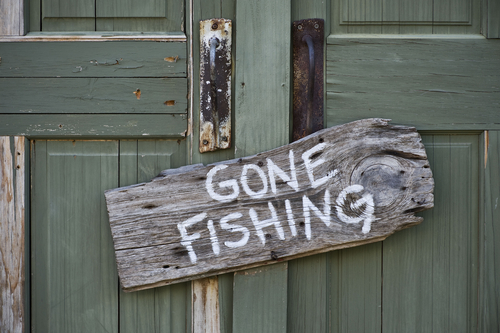
Stephanie Kimbro, once a solo practitioner herself, recently wrote of her decision to take a step back from both legal practice and legal reforming for a while, referencing a TED Talk on The Value of Taking a Year Off. Not that I needed any persuading – since after two decades in the same law practice and my husband’s death , nothing could be more appealing than taking a year off to figure out what comes next.
Although sabbaticals are most common in academia (which is kind of surprising because you’d think that a four month summer vacation would afford enough time to recharge), they’re not without precedent in the legal profession. One 20-person firm in Boulder Colorado has operated a sabbatical program since the 1970s, while bar magazines have featured the topic here and here over the past decade. Heck, there’s even a company that arranges bespoke sabbaticals for big law attorneys.
Yet, as you might expect, most of the sabbatical programs described take place at larger law firms. Although many firms don’t pay a salary while a lawyer is on sabbatical, the firm can manage clients and continue marketing efforts in the lawyer’s absence. But for solos who want to sabbatical, there are fewer options: they can either shutter their practice and see what happens, or arrange for backup which can be costly and will probably require some type of oversight.
At the same time, of most lawyers, solos more than most could benefit from sabbaticals. Although on one hand, solos have more freedom for outside pursuits than employed lawyers and therefore are less inclined to burn out, on the other, solos are also more likely to get stuck in a rut, handling the same cases over and over with little variety which can dull the creative spirit. In fact, I sometimes wonder if boredom more than ill-intent or financial need initially tempts lawyers to tap into client trust accounts.
Alas – if solos can’t take long term sabbaticals, there are substitutes. Most intriguing to me is the co-work-ation – a month or two stint away, working remotely from the office, and side by side location with other entrepreneurs at an exotic location; cutting back on workload to take classes to help retool your practice or maybe just taking long weekends. In the longer run, perhaps it’s worth it for solos and the organized bar to explore ways for solos to take a funded break – perhaps by sponsoring paid fellowships at the solo incubator programs cropping up all over the country, or secondments to legal technology companies. In the long run, burnt-out, depressed solos aren’t any good to their clients – or themselves.
Readers – have you ever taken a sabbatical from solo practice? How did you manage it?
Our small 4 partner firm in Portsmouth NH started one month sabbaticals in 2003 and I was the proponent of it. I have now been to Vanuatu to volunteer, to Italy with my family and to South America to hike and visit the wine region of Mendoza. One of the ways that we encourage the use of this is that the 3 remaining partners all contribute some funds at the end of the year to the partner that has taken the month off so that he does not lose income. We have all loved it and anyone can do it!
Kenneth Murphy