Noted video-expert and medical malpractice attorney, Gerry Oginski criticizes a Jacoby & Meyers television commercial that concludes with the voiceover:
You’re a nobody until you win your case.
Gerry comments – and I agree – that the ad isn’t particularly effective marketing since calling potential clients “nobodies” may instill hard feelings at the outset.

Though Gerry’s post discusses non-winning clients, it got me to wondering something similar:
 As a lawyer, are you a nobody until you win a case?
I think it depends.

Certainly, winning a big case can catapult you into the limelight especially if you’re a solo. Though winning the Casey Anthony acquittal presumably wasn’t Jose Baez’s  first victory, it certainly was his most public and has lead to other headline-generating matters.  Likewise, solo Alan Gura became the go-to Second Amendment rights lawyer in the country after  pulling out a huge win at the Supreme Court while my lawyer in the Rakofsky case, Marc Randazza has pulled out a string of First Amendment wins in high profile cases.  A few of the successful solo/small firm class action lawyers I know in various practice areas made it to the big time after risky cases against corporate giants that earned them huge payouts and lasting notoriety.

For solos more than large firms (but probably less than prosecutors or DAs), winning matters. When it comes to getting referrals from other attorneys, they have nothing else to go by but our record; no partner or superior to recommend our skill.  Sure, blogs and social media presence and speaking at conferences and law review articles all contribute to our reputation, but there’s nothing as black-and-white and clear-cut and verifiable to a potential referral source as a big win in a tough case that you handled on your own.  And of course, if the win is big enough, it can literally turn your practice around overnight, as the examples above illustrate. 
Via Jordan Furlong’s  twitter stream, I learned about Legal Care, a UK-based legal subscription service.  The Legal Care package costs 14 pounds/month and includes  free template documents, a will pack, document review service, 25 percent discount on fees if a solicitor is needed and a guaranteed response to emailed inquires within an hour, 24/7.

Centuries later,  hieroglyphics  are making a come back.

Or so it seems, based on the graphic-rich menus that predominate the new trend of casual, make-it-your-own and faux-healthy (take a look at the calorie count for some of the items) eateries like Sweet Green, Boloco Burrito, Naked Pizza  and Cava Mediterranean  where I’ve been indulging several times a week with my daughters away at camp.  Though I’m not a branding expert, the bright pictographs presumably target several demographics, from college students and recent grads who appreciate the youthful, cool-tech factor to busy professionals who can order more easily from mobile devices when there’s less text  to parents, who hope that the vibrant menu graphics are magnetic enough to pry kids free from the hypnotic spell of the Golden Arches.

So I got to thinking, does doodling have a role in the 21st Century practice of law?  I think so.

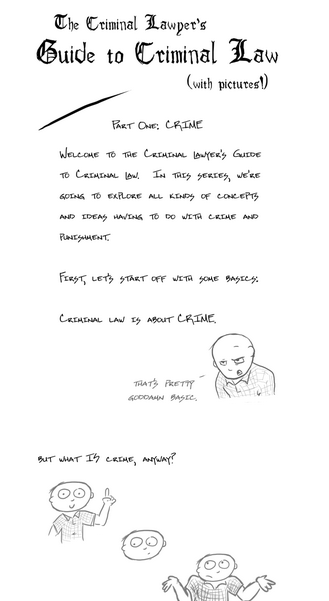
Of course, I’m not the first to see the nexus.   Nathan Burney, a fellow blogger, solo lawyer and Rakofsky co-defendant, has been working on a graphic guide to Criminal Law that explains concepts like mens rea, self-defense, duress and deterrence more concisely than the thick texts that I remember from law school.  Similarly, lawyers could use pictorials and doodles to illustrate complex concepts for clients in an elegant and understandable manner.  Clients today are inundated 24-7 with so many inputs, that a graphic can make their life easier.  That’s true also for clients for whom English is a second language or who never advanced far in school.

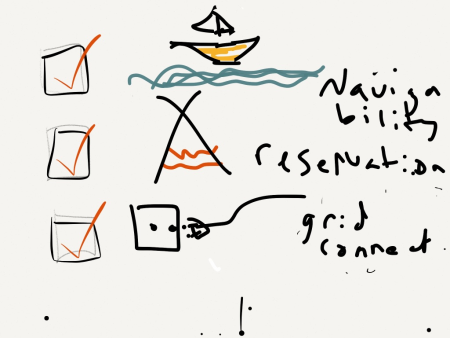
Good graphic design can be costly, so if you want to incorporate pictorials into a menu, you may need a professional. But you can also use graphics more casually to explain concepts to clients while they’re in your office. For example, you could use a whiteboard in your office or a scrap of legal paper to sketch out the path in a discrimination case from filing an EEOC complaint to federal court, or to show the different components of a bankruptcy estate.  Ipads are helpful here too; one of my favorite drawing apps is FiftyThree Paper and while it’s not free, it’s fun and easy to use (here’s my doodle showing the three different bases for jurisdiction for marine hydrokinetic projects under the Federal Power Act. Whee!)

Talk about value-pricing makes me crabby.  It’s not that I’m a fan of the billable hour or that I fear that flat fees (one type of alternative pricing) put lawyers at risk of under-recovery.  Rather, it’s just that many of the alternative/value-pricing gurus are so darn opaque about how to implement alternative pricing that the entire alternative billing practice seems just a little fishy; an elaborate cover for just pulling prices out of a hat.

Of course, I know that alternative pricing isn’t a shell game.  And as luck would have it, a lobster — or more accurately, a Harvard Business Review  blog post, Pricing Lessons from New England’s Lobster Glut by Rafi Mohammed — put me out of my crabby mood with a concise explanation of how value pricing works.  Mohammed observes that even though lobster prices at the dock have reached all time lows of under $2.00/pound, consumers aren’t necessarily paying less.  While grocery store prices for lobster have dipped to around $3.99 per pound and a few restaurants have reduced the price for  lobster dinners, Mohammed writes that prices haven’t changed at his favorite fancy restaurant (where a lobster roll is close to $30) or for “picked” lobster (removed from the bone).

The reason that some businesses lower prices and others don’t illustrates the concept of value-based pricing, explains Mohammed.  Some companies apply a cost-plus method, which involves marking up the cost of manufacturing a product by a fixed margin – e.g., 50 percent.  In this situation, a lobster dinner that costs $20 to bring to market will sell for $30, and when the price of lobster falls so that the dinner costs only $10, it will sell for $15.   Cost-plus pricing is easy to implement, but has no correlation to what customers will pay.  Asks Mohammed:
When you are buying a product, do you evaluate prices with a dictum that they can’t be more than 50% of what it costs to manufacture?
Instead, explains Mohammed:
The key to better pricing is to capture the value of your product relative to your customers’ next best alternatives. If your product is exactly identical to customers’ next best alternatives, your prices have to be the same. Why would customers pay more? However, if your product is better, there is an opportunity to charge a premium over rivals’ prices. Conversely, if your product is worse, you have to offer an incentive — a discount — to get customers to buy.
In the world of lobster, the products sold by grocery stores and restaurants in Chinatown are pretty much the same.  Because the products are identical, the prices have to be the same – which means that as one store or restaurant lowers prices, others are forced to do it as well.  By contrast,  the premium restaurant or “picked meat” provide unique value in preparation (and also cater to less price sensitive customers). Consequently, they don’t have to lower their prices, even in a glut to remain competitive.

With so many different online products and services available for potential use in practice, I generally don’t investigate them until I have a need. Make that a pressing need. I have been known to sign up for and learn to use a service just a couple of hours before I need it, which can wreak

A few weeks back, CNN reported on the demise of the solo physician, with the report predicting that within two years, 75 percent of new doctors will be employed by hospitals.  While the cost of doing business for doctors is on the rise (technology can cut long-term costs but doesn’t come cheap), reimbursements from insurance providers are holding steady or declining.  And while the article doesn’t mention the increased burden of student loans, there’s no doubt that heavy debt makes steady hospital salaries more appealing to a new grad than the ups and downs of solo medical practice.

Still, while hospital employment offers an option to physicians who want a steady salary and schedule, the demise of solo physician practice has the AMA and other health care experts worried.  Most obviously, in rural areas with few hospitals, there aren’t enough independent doctors to serve the population.  In addition, fewer independent doctors also
decreases physician autonomy since doctors have less independence working for a small group, and interferes with doctors’ ability to interact and build relationships physicians with patients.

The same concerns that flow from the gradual extinction-by acquisition of solo doctors in the medical profession are evident in both law-related blogging and broader legal profession.  Ten years ago, when law blogs first came on the scene, they served as a source of independent commentary and debate and general musings about politicals (like  InstaPundit, law practice and the legal profession.  To some extent, this type of independent voice and thought has blossomed even more with  Greenfield, Turkewitz, Randazza et. al, Tannebaum, Bennett, etc..(OK – all my co-defendants in Rakofsky v. Internet) but the solo genre bloggers are rapidly fading, being replaced by group publications like Westlaw Insider, Attorney at Work, Solo Small Firm Innovation. Don’t get me wrong; I like all of these blogs well enough (and I even write for SSF Innovation, the first of these enterprises) and they offer some decent practice management advice.  But while useful, they lack the edge and the spark that can only come from an independent voice (unless, there’s some cohesiveness, as there is at Volokh, where there’s interaction between the Conspiracy’s different members). 

So what’s the newest start-up trend?  Doing it on the fly.  That’s the conclusion reached by Anthony Tjan as part of the research he’s preparing for a book on successful small businesses, recently reported by Forbes.  According to Tjan:

One of our most striking findings was that of the entrepreneurs we surveyed who had

Academics and legal futurists may be  enamored by the Legal Zoom business model, the market sure isn’t.  As Legal Zoom readies to launch an IPO at $10 to $12 share, sources like  Reuters and The Street  are questioning whether a $483 million valuation is a tad “feisty” for a company that generated $156 million in revenues, but earned only $12 million in profits.  Combine that with looming lawsuits over UPL, and the fact that more than half of the stock is coming from existing shareholders (raising the question of why they’re not sticking around), and the future of Legal Zoom is looking just about as dim as the future of lawyers.

Or worse.  Legal Zoom’s $156 million in revenues are paltry in comparison to the $1 billion+ take of the 15 top firms in the AmLaw 100. And while big law attorneys work hard for their money, Legal Zoom works even harder.  According to this site, in 2011, Legal Zoom’s SEC filing said that it had 490,000 in 2011 – or 1300 a day.  Moreover, LegalZoom  spent $41 million on ads to lure them in a cost of around $81/lead. All for a measly $12 million in profits – which is the equivalent take home pay for  three partners at Quinn & Emmanuel.

Legal Zoom may be a new company, but the lesson is ancient: volume law practice is a struggle.  Even with all of the technology in the world, with a volume practice, you’re always on the prowl to  drum up more clients to feed the beast. That’s partly because volume practice requires bodies to serve, but also because volume work consists largely of “one-off’s” (clients with small matters who don’t come back) so you can’t leverage your existing marketing efforts.

Along with several other solo colleagues, I’m quoted in this exhaustive Maryland Daily Record  piece on office rental options here in the D.C. area.  One aspect of the article that surprised me is the wide disparity in rental prices across the region.  One of the attorneys profiled pays $1900 for space in Beltsville, Maryland that